Look for the Magic

While living with neuroendocrine cancer, you can look pretty darn good on the outside while living with insides that are…not so good looking!

Humans! Yep, we are human, and we are visual people. Sometimes, we need some physical proof to understand someone’s pain or issues. A broken leg with a big cast will bring you understanding quicker than a liver with tumors looking like a constellation of our brightest stars on a scan. I don’t know about you, but I never wanted to carry around snapshots of my husband, Jimmy’s abdomen and pelvis as proof. (Even though it was pretty cool to see those images.) On one hand, we are grateful that our friends and loved ones haven’t had to deal with a rare cancer diagnosis. On the other hand, it would be easier for us if we felt more understood.
Jimmy was often told,

“But you look so great!”

“I see you are going to work and still hanging out with family.”

“Why do you need to travel to see a specialist when you seem to be doing well?”

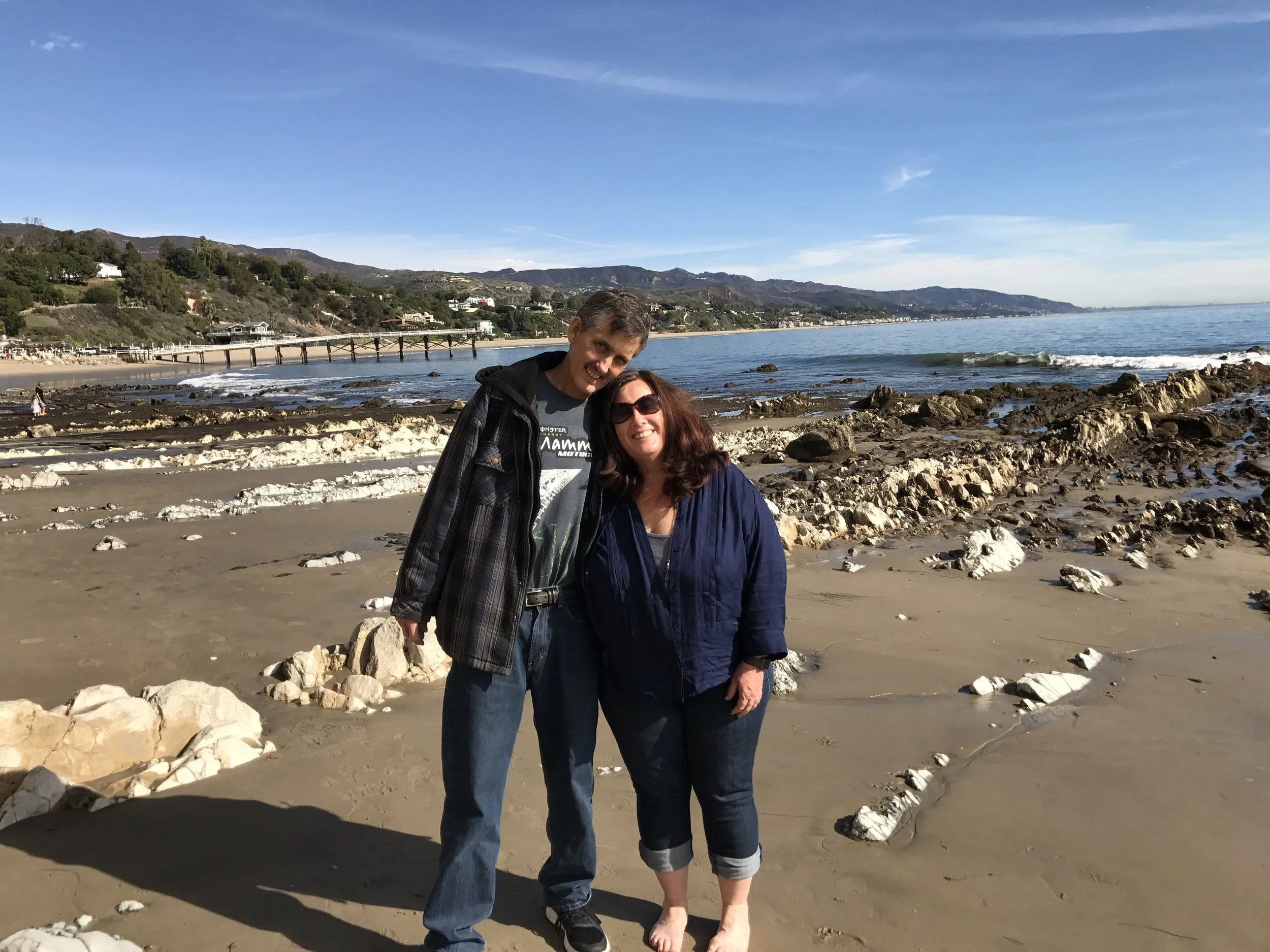
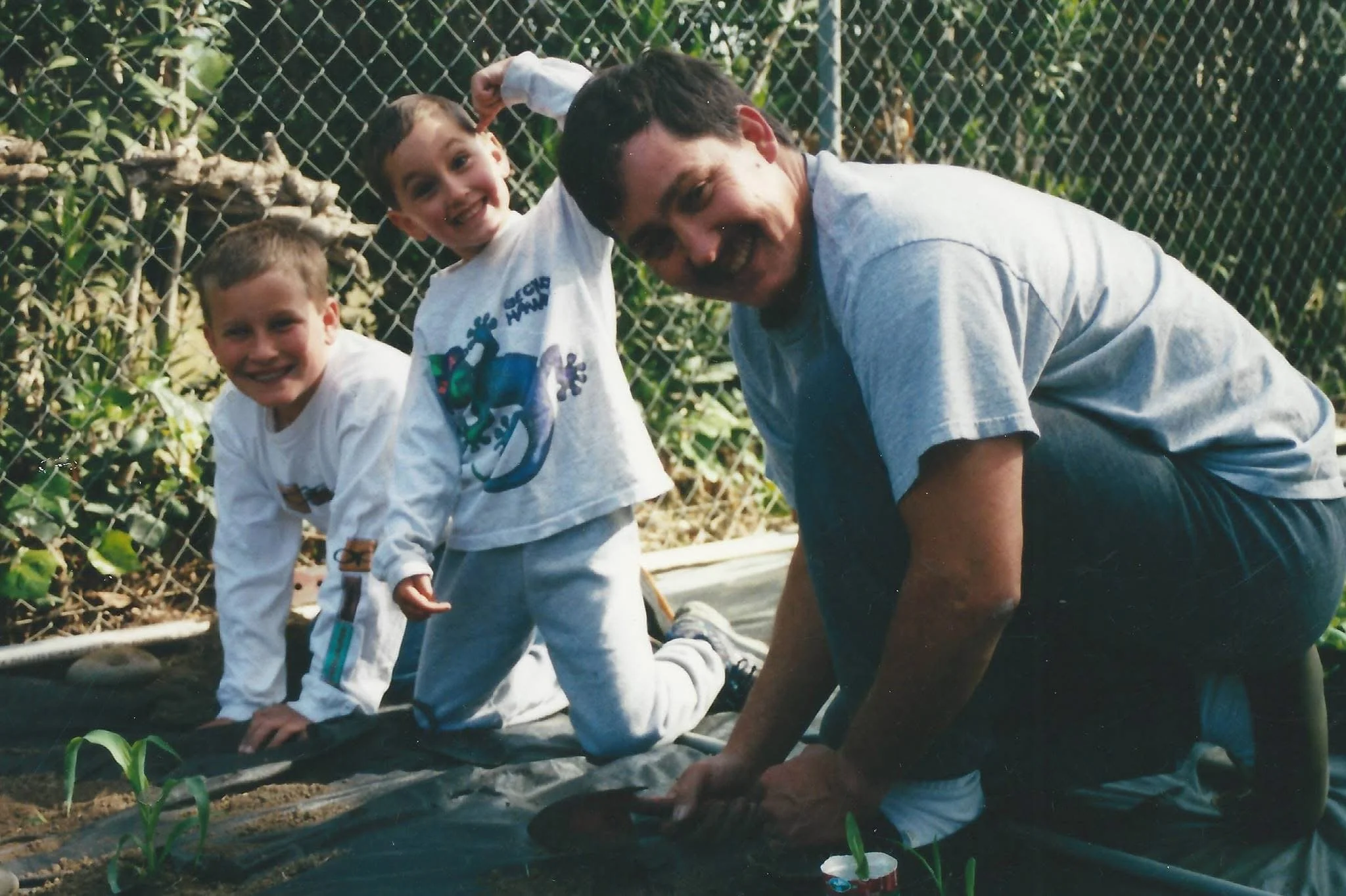
When Jimmy looked pretty good, we did get a lot of those questions. It was always frustrating to me. I wanted to shout from the rooftops (honestly, I got stuck on the roof of our house once and haven’t been back up again) about how it is true Jimmy looks okay, but he is in pain and his kidney, pancreas and liver are in a bit of trouble. He was working and doing his best. We wanted to preserve that time as much as anyone. To hold onto the days where Jimmy could work, go camping, play basketball with the boys or plant his vegetable garden. Our love of going to the beach to walk around was one way we could feel peace.

We were holding on to those days. We had been in doctor appointments listening to scan summaries and treatment options. Jimmy did indeed have invisible pain and discomfort--that cannot be shared or felt. He had quiet worry in his mind. The best gift I gave myself was practicing the understanding of others intentions. People love you. People love your person with cancer. They want to see them looking good because it must mean they are okay. They do NOT really want to see scars and trauma, because they do not want that for you. They want whatever it is that you are dealing with to be fixed easily, like with an antibiotic or special bandage that they can see that will eventually come off with a little soap and water. Knowing how much someone they care about is suffering can be too much to dial into.

We don’t always understand the things we cannot see. It is also scary to know that they could be walking around, working and laughing with their family at Sunday night dinner AND be carrying around an invisible illness. That is a human feeling, and it can make us uneasy. The reality is most of us walk around with our outside appearance not matching our inside happenings. Emotional or physical symptoms are not always written on our faces. We have also learned to hide what is going on to make others feel comfortable. We don’t want to make others feel what we are feeling. We also don’t think others will understand.

As a caregiver, I started to see our options changing and tried to hold my worries together. That is when people started giving interesting advice. That didn’t go well. I was turning over every option in every state to try to find the answers Jimmy could benefit from. Sleepless nights were spent pouring over medical journals, writing emails to doctors and learning how to find the best help for my guy. I felt such a responsibility to not just Jimmy and our boys, but to all who loved him. One person said to me “Don’t let anything happen to him.” It wasn’t meant to be as mean spirited as it sounds. It was how they said, “I am scared something can happen to my dear friend.” I felt it at every corner. I knew everyone was looking at me to find the answer. I felt so much pressure to continue doing whatever I could.

Then, the help started coming in…. Articles on rare treatments found in places in the middle of nowhere and special bottles of elixirs that Jimmy’s friends would bring home from their travels. These made me feel upset, like I wasn’t doing enough to help him. Jimmy finally stopped bringing them home from work. He quietly accepted these trinkets and kept them on his desk. After he passed away, I went to pack up his office, and he had bottles with random labels promising liver health or other magical properties. He had magic coins, prayer cards, and talismans of all sorts. Instead of upsetting me, tears flooded my eyes. They DID help him. It wasn’t what was in those bottles, but the love and thought that went into their purchase. They loved Jimmy. They weren’t trying to tell me I wasn’t doing enough, they were trying to be helpful. This allowed them to show their love.

Those items gave Jimmy a feeling of protection. He could look at the little funny looking man statue and know his friend from the front desk was not only watching over who was let into his building, but was also sending his love to Jimmy though this little token. He felt so loved and cared for. In turn, that gave him more inspiration to keep moving forward through that invisible pain and worry. Jimmy was the one living with neuroendocrine cancer. He deserved to have every conversation and token of kindness and love. It didn’t mean we were going to use these items over the advice of our medical team. We wanted to be heard and understood and we were. We were not always getting the answers we wanted, but we were getting things equally as important. Friendship. Family. Community.

I now know that not every person will understand what you are going through. I also know that no one wants to see their people hurting. When they literally cannot see it, it is easier for them to offer advice that often isn’t applicable. This comes from love. Kindness comes out in ways we don’t always understand. Looking back, this was the part I sometimes got wrong.

While cleaning out Jimmy’s desk, I also came across a whole file of articles on cancer and “internet cures.” Jimmy knew better than to bring them home to me and I still am grateful for that. I always felt more emotions than I could hold in my body when given something like that. Caregivers are strong, though the lack of other options wears on our strength. Caregivers are also always inspired by the person we are caring for and all they must handle. We are also worried and often feel burdened by an unrealistic set of responsibilities to our person. We can feel like what we do is never enough. We want our person to be okay more than anything else. Before sharing an article, ask if it is something the caregiver is interested in. Tell the caregiver that you thought of them and that is why you want to share it. Let them know that you know they are doing everything you can as a caregiver. That is what helps the most. Knowing you see us. Knowing you see that we are important and what we are doing for our loved one is noticed. Not everyone can understand this path. It is a tricky one. It is neuroendocrine cancer. It is a very individual cancer for all of those living with it. That means that everyone with it is going to look, feel different AND need different treatments. What we need is universal. We ALL need understanding and kindness.
Grab a little box, add your acquired trinkets and make a file for the articles. They do hold magic. They were given with love and hope for a good tomorrow. Don’t forget to make space in your heart for the real magic of what is behind those gifts. This is where a lot of hope lies.

This is written in gratitude to all the people we met over the years, going through similar journeys and how we all help one another see the true meaning of community.

Please reach out to me if you would like me to write about something that touches your situation. Please reach out if I can be a source of understanding.
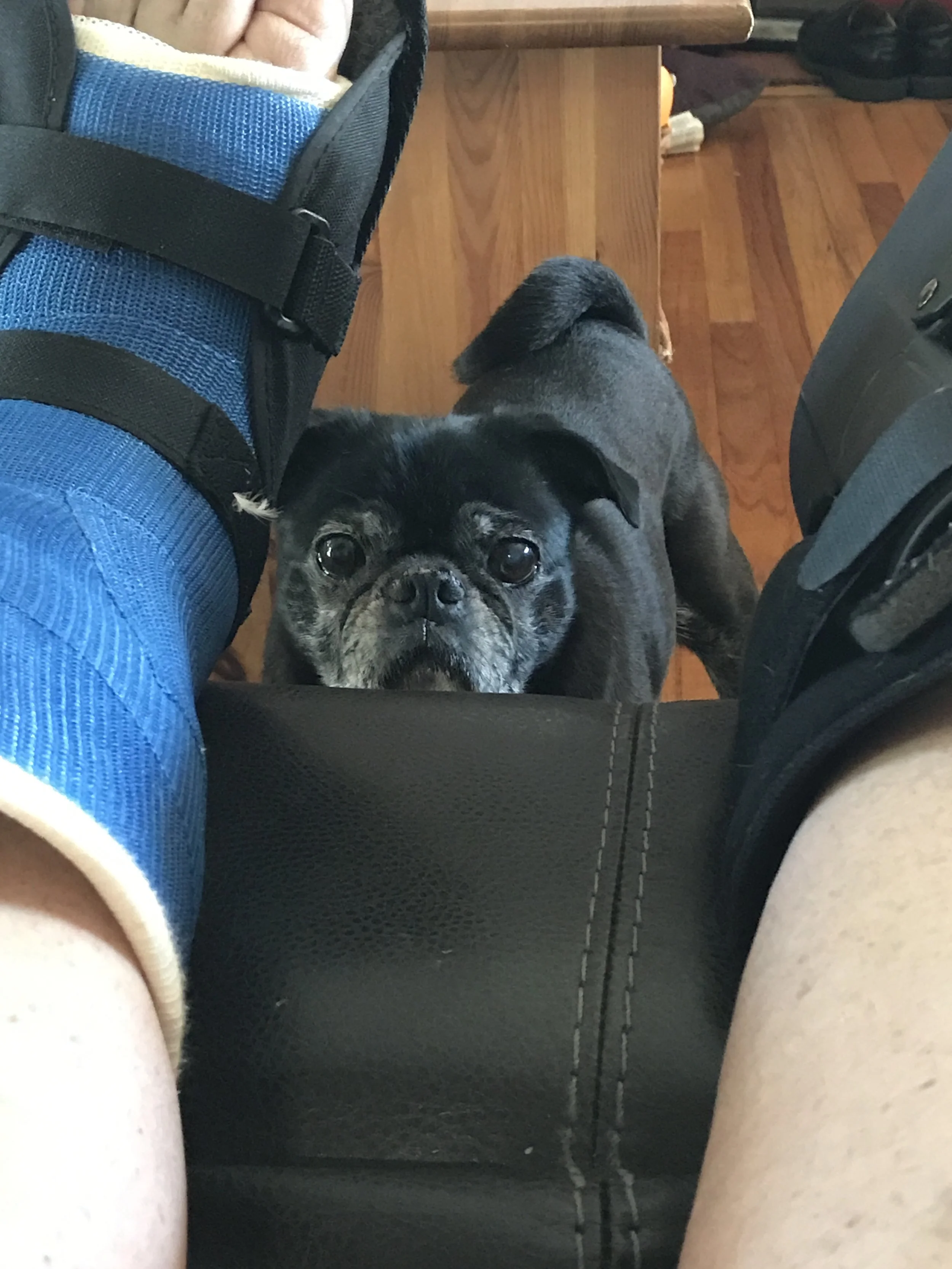
'Foot Fall' of 2017

Make it stand out

Two broken feet…and Buddy!

For caregivers, it is hard to quiet the mind. We really are thinking for at least two people, at all times. If you are a parent, you may be thinking about your loved one with cancer, your children and your task list to keep life humming…sometimes you will remember to think about your own needs.

During the final few months of Jimmy’s life, I was feeling exhausted and worried and trying to be two steps in front of what could happen next. I wasn’t exactly as present as I should have been. Those around me encouraged me to take some time for myself: Go for a walk! Get some rest! Great and well meaning advice. I went for a walk and the home health nurse called to let me know she didn’t like what she was seeing with Jim’s health.  So, I sat down on a little wall in front of a house I was passing and decided I needed to cram a bunch of living into a small amount of time. I was going to get my hair done, a manicure and pedicure, and try to sneak out for lunch with a friend.  Maybe everyone was right! I needed to take some time to rejuvenate and be ready for what comes next.

I felt pressure to check all the boxes. Mom stuff? Check! Jim’s medicines ordered? Check! Home health scheduled? Check! Next, clean the house, pay the bills, walk the dogs…and buy dog food for a month out, just in case. My quest to feel more organized and ready for what may come next actually was hurting me. 

With a head full of orders to get a lot taken care of, I started off by going for a pedicure. My family was happy that I was doing something for myself!

I threw on some flip flops, drove to the salon and parked my car. I hopped out of the car and took a call from my niece and walked up three steps to the salon door. Just then, I realized that my car was still on! So, I turned around and lost my footing. I did a ‘60s Moondog surf move down the steps and landed in the asphalt parking lot. My niece was still on the phone and the contents of my purse were strewn all over the place. My knees, hands and elbows were covered in asphalt and little rocks. My feet? Yeah, they were not so lucky.  I knew instantly that I had broken them.  

There I was, putting on a show for  everyone in all the stores that face the parking. I will never be considered for an Olympic sport unless they come up with Cartoon style free falling

I couldn’t even stand on my own two feet! I called my sister and… she didn’t answer. As I crawled to sit on the step that I used as the finale of my grand fall, I actually saw her drive by! Then, of course, I started laughing. I sat on that step laughing, bleeding and watching my feet change color and swell like the imaginary wave I rode down the stairs.

I next called my son and he found me in a mess of a situation. We drove to the ER, and they took mercy on me and only casted one leg and gave me a boot for the other. When I returned home, my husband gave me his adjustable hospital bed and he moved to his recliner, together we took up most of the living room. What a pair we made!

There I was. I had to sit or lay down for weeks. Standing up hurt, but sitting still was hurting my heart and nervous system even worse. I felt so guilty for being out of commission. Jimmy needed me to help him and now I was asking him to drag his IV pole to the kitchen to grab me water.  I noticed the whole house sort of kicked into a panic mode. How were they going to manage all of the things that I did? 

We quickly learned the answer: they weren’t. The shift in the house was a necessary one. It was a good time for Jimmy to see what it was taking for me to not consider my own needs and take care of him. He did start doing a little more for himself. That, in turn, gave him more feelings of independence. My son who was living with us had to make some changes as well. He had to run to the store for us and help his dad a little more. The days were quiet, instead of me rushing in every morning to open the curtains and start the day with gusto! Instead, we lounged around. We watched a lot of Law and Order. We napped. I got to just BE with Jimmy. All my concerns about the near future and the far future changed. It really was time to slow down. Sit still. Just be. We did less and enjoyed the moments we were in more.

It was healing to have to stay put and to let the situation unfold organically. Honestly, we are only in control of a few things anyway. We can practice good healthy habits, like our SEES (Sleep, Eat, Exercise, and Spirit). The incessant worry about Jim’s every health issue was not changing much except the stress was making me out of focus and overwhelmed. The Foot Fall of 2017 ended up being a gift. I felt like the burden of doing was replaced with the gift of feeling my feelings and coming to terms with a lot of emotions. It gave me time to be grateful to sit next to my husband and hold hands while we napped or watched another episode of Detectives Stabler and Benson solve a NYC crime with the same actors from a near distant episode playing different characters. I remember the house being so full of peace. My son, Kyle recently showed me a photo he took of Jimmy and I sleeping during that time. Me on the couch and Jim in the chair. You see Law and Order on the TV. It is truly one of my favorite photos of us. Just being a married couple who naps. Just being. 

Soon after that, Jim went into hospice at Cedars-Sinai Medical Center, I returned to walking around the hospital with a boot and a cast. I returned to taking the best care of Jimmy that was possible. 

What didn’t return was the notion that I was responsible for holding up the world. I was given time to realize the way to be present for your loved one is to rest and keep your mind free from too much worry. It literally means stay near them. Love them. Please don’t break your feet to learn this  kind of lesson! Love yourself enough to let this time in your life be one step at a time. Take time to be together.  It is worth it. Every second.  

Please take care and let me know if there is a topic you would like me to write about! 

Jud Kimmel Shares his NET Journey

Please welcome our guest writer Jud Kimmel for this month's Karalyn Cares. Jud is a NET patient, an advocate and someone I find to be proactive for his his own health and compassionate and helpful to others. Learn about Jud's NET journey and Karalyn will be back next month!

Thank you to the Healing NET Foundation for inviting me to share a little about my NET journey and my passion for patient engagement.

After a year or so of worsening diarrhea, skin flushing, and shortness of breath, and several frustrating medical dead ends, I was diagnosed with Stage IV, Grade 3 Small Bowel NET in September 2022.  Tests confirmed many metastases in my mesentery and liver, as well as mild carcinoid heart disease thanks to the hormones secreted from my functional tumors.

I was a patient advocate, for myself, from the start of my NET journey – devouring the educational resources offered by the Healing NET and other neuroendocrine cancer (NEN) organizations.  I was fortunate to have a general oncologist who referred me right away to a NEN specialist, which led to my enrolling in the NETTER-2 clinical trial and receiving PRRT (along with both short-acting and long-acting Octreotide) as my first line of treatment.    

PRRT shrank and stunted my NETs and reduced my carcinoid syndrome symptoms by killing my largest liver NET and it opened the door to the tumor resection and ablation that I underwent last fall.  I’m currently NED and although I know my Stage IV disease will return at some point, I love being able to focus my “cancer energies” in other directions.

NEN patients and caregivers are supported by excellent advocacy groups but I myself struggle to keep track of everything happening.  My own need for a clearinghouse of sorts led me to start the Neuroendocrine Cancer Event Hub on Facebook – which is simply a master calendar of upcoming educational events.  I monitor roughly 20 advocacy websites and post upcoming conferences, webinars, and Q&A sessions to the calendar.  I’m now developing a website called NENfolk.org: the master calendar plus a guide to the many videos, podcasts, and other forms of content out there.  My goal with NENfolk isn’t to reinvent any wheels but rather to assist people in finding the learning resources that work best for them.

Another passion for me is in building connection and agency among men with all types of cancer.  Men are much more likely than women to isolate themselves, suffer shame and depression, and be passive in their own medical care following a cancer diagnosis. . Studies indicate that men have lower survival rates and outcomes compared to women with the same cancer types and stages. I myself was severely depressed early in my NET journey and I am incredibly thankful to have found a men’s peer group called Man Up to Cancer: manuptocancer.org.  MUTC is changing what it means to be a man navigating cancer, and I find that the brotherhood borne of shared experience and understanding is key to my own wellbeing.             

And finally, in receiving Dotatate PET scans and PRRT, I became fascinated by the rapidly evolving field of nuclear theranostics.  I’m excited by the creation of new radiopharmaceutical therapies (RPT) to treat more forms of cancer – that is, beyond NET, prostate, and thyroid – and I share my story in the hope of helping to advance RPTs for everyone needing better treatment options.

Going forward, I look forward to building NEN patient knowledge and engagement in their care decisions, and encouraging men especially to lean in.  Countless social media posts from the wives, daughters, and mothers of men with NENs suggest that many men defer to their female loved ones, as well as health care practitioners.  I want to be part of changing that paradigm, with more men educating themselves, connecting with other patients, and making confident decisions in consultation with others.

The other day, a well-known and respected NEN patient advocate gently chided me for introducing myself with “I’m a Stage IV, Grade 3 GEP-NET.”  Her point was that we are much more than the disease with which we are living.  I’m a husband, father, feeder of a dog and two cats, homeowner, brother, son, friend, Minnesotan, public finance advisor (my day job), music lover, and indoor rowing enthusiast – just to name a few.  It took me a long time to figure out how to add “NET patient, probably for the rest of my life” to the list without having it overwhelm everything else.

Getting involved in the NEN, men’s cancer, and radiopharma communities has helped me get there.  Being part of things that are bigger than myself has lent me new perspectives on my “incurable but treatable” NET situation and given some much-needed purpose to having this often frustrating and scary disease. 

I know that not everyone has the time, health, energy, resources, or motivation to engage in patient advocacy, but I hope this story maybe inspires you to connect with another person who is going through it, just like you are.  That alone is about as powerful as it gets.

Cupcakes and a Speeding Car

Not that I see myself on a TED Talk stage anytime soon, but I have a list of things I feel like sharing with the universe at large. Fear and cancer happen to top the list of talks I would give. (Along with why mayonnaise is the worst possible food.)

Nobody wants to live in fear. It is such an awful feeling in our bodies. It keeps us from sleeping and preoccupies us when we are trying to work and makes us worry about everything else around us.

Fear is part of the cancer equation. It is also one of the true natural instincts that we are born with. We come hardwired with a fight or flight mechanism. We are supposed to run away from danger. We sense it, taste it, and can be paralyzed by it. Hearing “don’t worry,” doesn’t do much except make us feel bad for worrying. We may not be running from cavemen gone wild anymore, but we are dealing with fear that our bodies are creating. A bonafide internal chase of emotions.

With a cancer diagnosis, we hear the words, we experience the symptoms, we see the plan for surgery or treatment. We see the look of concern on our loved ones’ faces. We also feel our bodies differently. We now know with certainty that we are not in the driver’s seat. Oncologists and nurses are amazing at their jobs, and I have so much respect for them. A healthy start to a conversation with them could be, “I am scared.” Their response could start with, “You have cancer, and that is scary. Together, we will sort this out. Let’s all take a minute and look over what is going on, let’s make a small plan for the near future and give you some help on how to manage the stress and worry.”

Fear comes out in many ways while we are living with cancer. I felt that I had to keep it all together for everyone and continue to move forward with Jim’s diagnosis. Adding the caregiver hat was something I did with pride. But everyone has a limit to what they can stand. When my husband, Jimmy, needed to go to Switzerland for treatment, I was in a quiet panic inside. It wasn’t in our budget, it meant Jimmy had cancer that was acting up, it meant putting an ocean between us and our children for ten days. I had arranged care and meals for the kids. I had drained our bank account to get us there. I had fought with the insurance company to get the treatment covered. I had thought of everything, but what I didn’t do was deal with the uncertainty and fear I was struggling with in my body. I was trying so hard to hold the down fort and not worry Jimmy or the boys, that I stretched myself too thin emotionally and physically.

The night before we left, a friend gave us a plate with giant chocolate cupcakes on for the kids. The neighbors were all outside to wish us well. We were all standing on the lawn when a young guy in a decked-out hotrod fishtailed out of control right in front of our house, which lies on a curve of a street. He came close to losing control and could have hurt my family and friends. My nervous system decided enough was enough! Without any thinking involved, I picked up one of the cupcakes from the plate I was holding and flung it like I was the starting pitcher for the LA Dodgers. That cupcake, though dense, had some energy in it. It went directly into the open passenger window and hit the closed driver window, from inside the car. It broke into a thousand pieces before our eyes. As the driver realized what happened, he stopped his car in the street while the neighbors and my family just stood still. The driver looked at me and decided I was maybe not in the mood for a confrontation, and he drove very slowly down the street. Then, I started laughing. I couldn’t stop. Tears rolled down my face. My family? Yeah, they were not impressed.

I was at capacity for handling my worries. I was scared. I was overwhelmed and I didn’t deal with it properly. Throwing a cupcake at a speeding car felt so great in the moment but really, I could have taken care of myself a little more to prevent the “cupcake toss of 2008.”

Guess what? It wasn’t just the speeding driver. I was so full of fear and concern from every angle in our lives. I was trying to take everything on, so my husband didn’t have to worry about anything but his health. Now, I had done it and added to his worry. He was also worried about his health but acted fine for us. Our kids were being so brave, yet they also had concerns. I felt that I was holding up the entire family when in fact they were following my example and holding it all in. It was too much for all of us. I had been so laser focused trying to handle it all, I didn’t give any of us a chance to be open about how we were really feeling.

We went into the house and after I stopped laughing and crying, sat down in the living room and had an honest conversation. I apologized for “cupcaking” the speeder. (I am secretly not that sorry.) Next, we took turns talking about being scared or worried about the unknown. I admitted that I was trying to do too much so no one else had to worry. I came clean and said I was a little afraid of dad having to leave for treatment far away from what is familiar. I worried about leaving our boys. I also said how fortunate we were to have this plan in place to help their dad. Jimmy told us he was worried about being gone from work so long, but also felt hopeful the treatment would go great, and he was ready to go! He told the boys he knew they would be fine and to enjoy the things we had planned for them while we were gone. I asked the boys to write a list of questions, and we would get them answers. We also promised Swiss Army knives and Swiss chocolate.

We came up with healthy alternatives that throwing an expensive cupcake could never really solve. The truth is, we cannot know much with great certainty about cancer. We must be positive, hopeful and strong. We can also be ready to practice techniques to handle the bigger emotions. We can also be honest at times and say, “I am afraid.” Three simple words that can lead to a closer relationship with your loved one. The same words can lead your medical team to offer you some help. By sharing it with others and finding solutions, you can bring comfort to someone else. That is pretty amazing.

P.S. I still giggle about that darn cupcake.

Nourishing the Body and Soul

Neuroendocrine cancer has many ways it can knock us out of our comfort zone, and so we may spend a lot of time trying to hold onto our usual way of living. In some ways it is an extra job. The constant change in our diagnosis can remind us of how little we have control over. Learning to lean in and make changes was easier for our family and more enjoyable!

One really important area that can be tricky is nutrition and eating. For those living with neuroendocrine cancer, one person’s diet may not work well for another person. There are some issues that, as a community, we will likely deal with, like diarrhea or malabsorption. There are also many variables that make everyone’s needs different.

My husband Jim’s point of pride was our vegetable garden! Every year, he would have our boys help him tend to the soil, plant the seeds, and water the garden. He would watch for the carrots, tomatoes, zucchini, corn, etc. to pop up out of the ground like magic. He grew enough vegetables to feed a small country. Our neighbors would see him coming with his buckets of vegetables and welcome the bounty with open arms. (Some probably cried on the inside wondering what to do with 10 pounds of tomatoes!)

We have always been a family of traditions. Family dinner at 6:00pm every single night and on Sundays we had brunch together under the pepper tree in the backyard. We loved to go to restaurants; we celebrated around a meal. Someone graduated kindergarten or got a new job: Let’s have tacos!

After Jimmy’s initial diagnosis of neuroendocrine cancer, we were all in on making every nutrient count! We got a juicer and began juicing veggies and fruits for him. We upped our salads and added more vegetables to our diet. If it came from the ground or a tree, we were going to make sure Jimmy had it!

Little did we know that nuts and raw vegetables were creating issues for Jimmy. He went in for a colonoscopy and the doctor said he had to stop the test due to a large tumor blocking Jim’s colon. He told Jimmy to stop eating raw vegetables, nuts, and meats because they are hard for the body to process. I felt terrible because all I wanted was for his diet to boost his health, not hurt him!

After Jimmy healed from his initial surgery, we met with a Registered Dietitian who helped us tremendously. We were fortunate enough to be receiving treatment in New Orleans and we scheduled a meeting with Leigh Anne Burns, RD. Leigh Anne taught us how to make food healthy and easier for Jimmy’s body to process. When Jimmy’s diet had to change, so did our family’s diet. We all adapted to the changes.

Over the course of many years, Jimmy’s health and diet took many twists and turns. After many trips to the ER for a nasogastric (NG) tube to help with blockages, we learned even more dietary changes were needed. We did what we needed to. Jim loved lasagna and salads and BBQ, but eventually they were completely off the table. Eventually Jimmy needed to be on Total Parenteral Nutrition (IV nutrition and hydration). This is not typical for every neuroendocrine patient and when it does happen, for many people it can be temporary while their body heals after surgery. For Jimmy, this was his new, permanent way of life. A backpack held the liquid nutrients that kept him going. There were also a lot of other things to go with it: saline syringes and alcohol pads, tubes, and a PICC line. We also had to follow a schedule for when to start the bag, when to sleep and even how to work around it.

This was another setback to our dinnertime, which was once our best time of the day. It was so hard to enjoy meals when Jimmy couldn’t enjoy food anymore. The traditions as a family that we celebrated with favorite foods and gatherings came to a sudden stop. This was only temporary until Jim realized this wasn’t good for anyone and found a way to enjoy food in a different mindset. He understood more than ever how important food and nutrients were. He decided to start cooking for us! Suddenly, he was making us his favorite foods or whatever he was craving. With no warning, we would have enough sauteed zucchini and squash to last us a year. We would come home to homemade salsa with the tomatoes he grew with so much love. We would go camping and he would be hooked up to an IV Pole for his hydration bag while cooking more food than we could possibly eat. We would find him barbecuing a tri-tip steak big enough to feed the neighborhood!

My adult children and I just discussed this over the weekend. It was hilarious to remember how much food Jimmy would make. We knew that the neighbors were also waiting for that familiar knock on their doors to find Jimmy with these concoctions for them. We laugh about it now. He would not take no for an answer! Oprah gave cars away and Jimmy gave baskets of vegetables and food! “You get zucchini and bread, and you get zucchini and bread!”

Recently, I asked our two sons, Gradon and Kyle, how all the dietary changes in our home affected them. Over the course of 14 years, they saw our food routines change quite a lot. They know what they like and what they don’t. They understand that it is important to pay attention to what you are eating and make the meals count. They both are big “foodies,” who enjoy a good restaurant. One is an amazing chef in his spare time, and one knows every good restaurant in Los Angeles and enjoys trying new things. They say it has a lot to do with their dad.

I was so afraid the worry and the changes in meals were going to have a negative impact on our family, but Jimmy didn’t let that happen. He still found joy around food. It was in the grocery store shopping and the big meals he made for his friends on their annual camping trip to the desert. It was calling his TPN “Steak and Eggs.” The fact of the matter is, as Jimmy said every single day, “If your feet touch the ground today, it is a good day to have a good day.”

Whether you are the caregiver or the person living with neuroendocrine cancer, paying attention to nutritional needs and asking for guidance will increase quality of life. Good food, good company and feeling your best is good medicine. Here is to your health and your journey being the best it can be.

Blue Sky Day

Doctor appointments, scans, injections, labs, work, family, daily grind, and worrying over your illness or your loved one’s illness can take our nervous systems into outer space. We cannot really rest or sleep well--though we are exhausted--because our minds stay sharp and diligent 24 hours a day while neuroendocrine cancer lives in our homes. For a very long time this was normal for me. I didn’t stop worrying, driving, and running around while taking care of my husband Jimmy, our sons, our dogs, and our home. I did my best to keep track of everyone’s everything.

On a particularly beautiful day in downtown Los Angeles, Jim had two separate medical appointments. We drove an hour and a half to get to the first appointment. Traffic was terrible, but the sky… the sky was what I call Toy Story blue. A few white clouds would drift by, like peace calling, just out of reach.

We knew Jim’s health was not improving, and there were a lot of unspoken words in the car that day. As we finagled our way into the smallest parking spot ever, we barely felt like getting out of the car. Being the responsible people that we were, we didn’t want to keep our doctor waiting. After going in and hearing stressful evaluations of where things were going, we left even more hunched over than how we walked in.

I drove down La Cienega Blvd. to the second appointment nearby. As my GPS told me to turn left onto Beverly Blvd., my brain decided in that very moment that we would indeed NOT be turning left. We passed the parking lot and kept going straight. Jimmy didn’t say a word about my abandoned turn as I kept going in this new direction. Without warning, I quickly turned the car into a tiny shopping center. There was a Winchell’s donut shop! I parked, and Jimmy looked at me and smiled. A real smile. I hadn’t seen that one in a long time.

I grabbed Jimmy’s hand, and we went into Winchell’s for two donuts and coffee. We sat at this little table and looked outside at the gorgeous day and made plans. We thought about going to the Dodger’s opening game! We discussed a trip to Mammoth Lakes with the kids. We made plans that sounded great. I called the doctor’s office and explained we just didn’t have it in us to make the appointment that day. They understood. After 14 years, they seemed to agree, we needed a break. To this day, I can taste that strawberry donut. I can tell you how happy I was to be in a random donut shop with my husband, letting concern, worry, and big decisions wait for another day.

This day is one of my most favorite days with Jimmy. I treasure it more than I can explain.

We didn’t make it to Dodger Stadium or on another trip to Mammoth, but the hope was there, and our joy in pausing, even if it was just for one afternoon in sunny California, felt so great for our souls. We felt empowered and reminded that we can and should make some space to find our peace.

If you, too, feel overwhelmed or feel that you are expected to hold so much together that it is stealing your joy, it is okay and almost necessary to play hooky. It is okay to find a blue-sky day and find your dreams again. Finding yourself holding hands in Winchell’s Donuts at 1:00 pm on a Wednesday is pretty darn great.

If you need a break from something, please talk to your medical team. Sometimes, they may agree with you. You can heal and rest and come back ready to face treatments, decisions, and concerns with less of the feeling of being weighed down by the urgency of healthcare decisions. We make hard decisions about living with cancer daily. We also must remember to put some effort into our joy.

I know this NET community pretty well. We are smart and wise, and we know our bodies. If you feel it is time to reset your clock, to rest your mind and body, please consider it. One day of light and peace can strengthen you and put you in a better frame of mind for tomorrow. Whether you are the one with neuroendocrine cancer or a caregiver, you are important. Look for blue sky and puffy white clouds for inspiration. I hope you find time for daydreaming and filling your cup with hope.